Environment

Environment
Showing posts with label roof. Show all posts

Tuesday, November 7, 2023

Tejado, roof FINISHED

 Milestone: after 1.5 years the roof is now finished. All rooftiles re-set where loose, stuck into place with special pur para tejas (pur for rooftiles), the gaps filled with lime mortar, and the sides and the lime mortar now covered with Sikalastic 127. This is the biggest physical job engineer Jansen ever did, and he’s not keen to repeat it.


To see all posts about the roof project: click here


Saturday, June 3, 2023

Rain, again

1. Rain, again. 

After an extremely dry winter and spring. Hm.


And they were right.

2. Roof

Despite all the work on the roof, we still have leaks. Well, that is no surprise really, the rain was extreme, and the roof is not yet finished. Only the ends of the roof tiles are now mortared, the sides still need their Lanko treatment.


Still, a little disappointing. Not much water, just a few drops, but irritating all the same, as the sound of a drop of water on a wooden floor is like a smack on the head, at night, when you are sleeping. And there were about 15 locations with a small leak.

3. Road

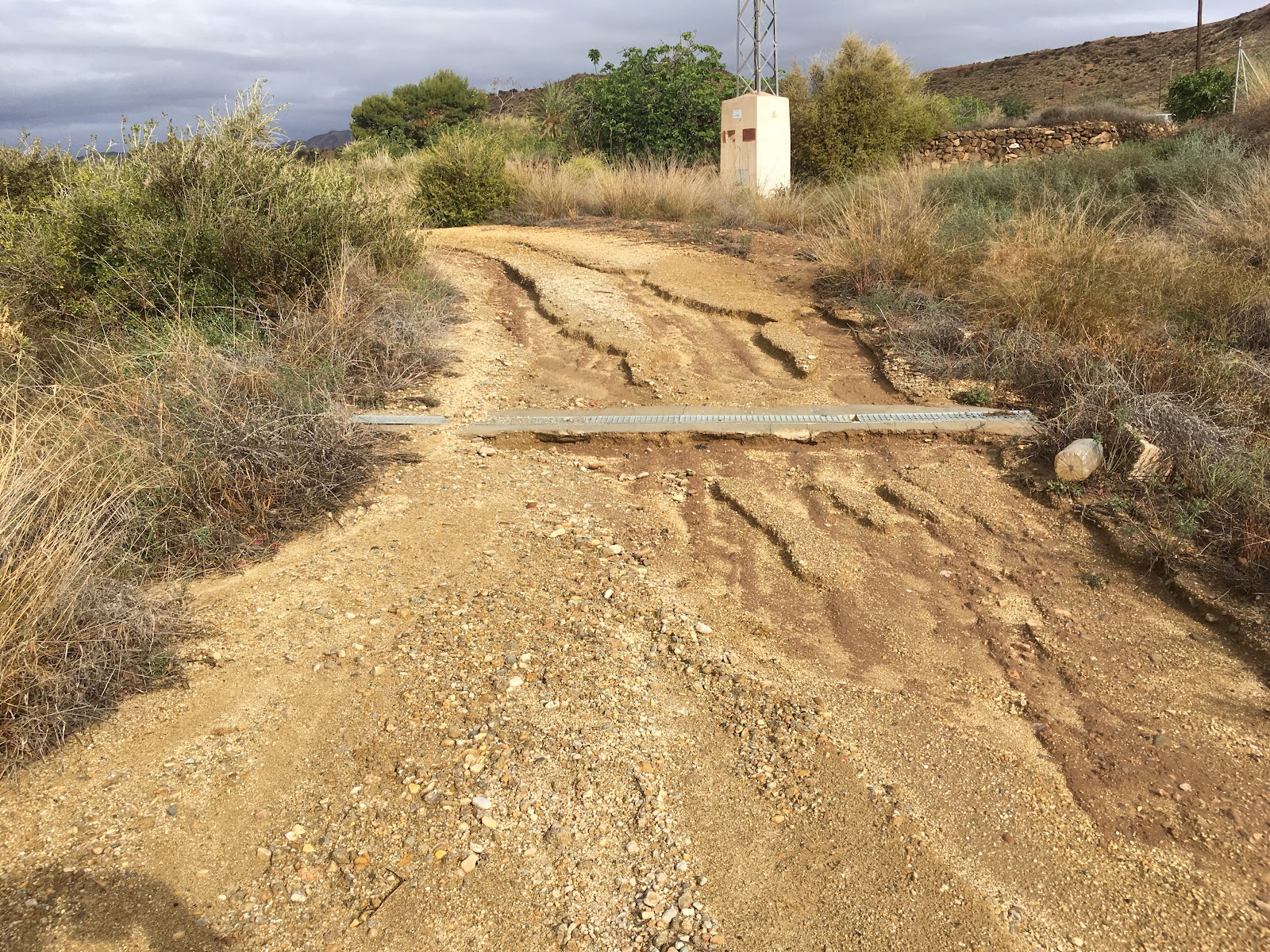
The canals work. But, with lots of water coming from the field at the back, the gravel fills especially the middle canal, and it ceases to function, and the water simply flows over.  

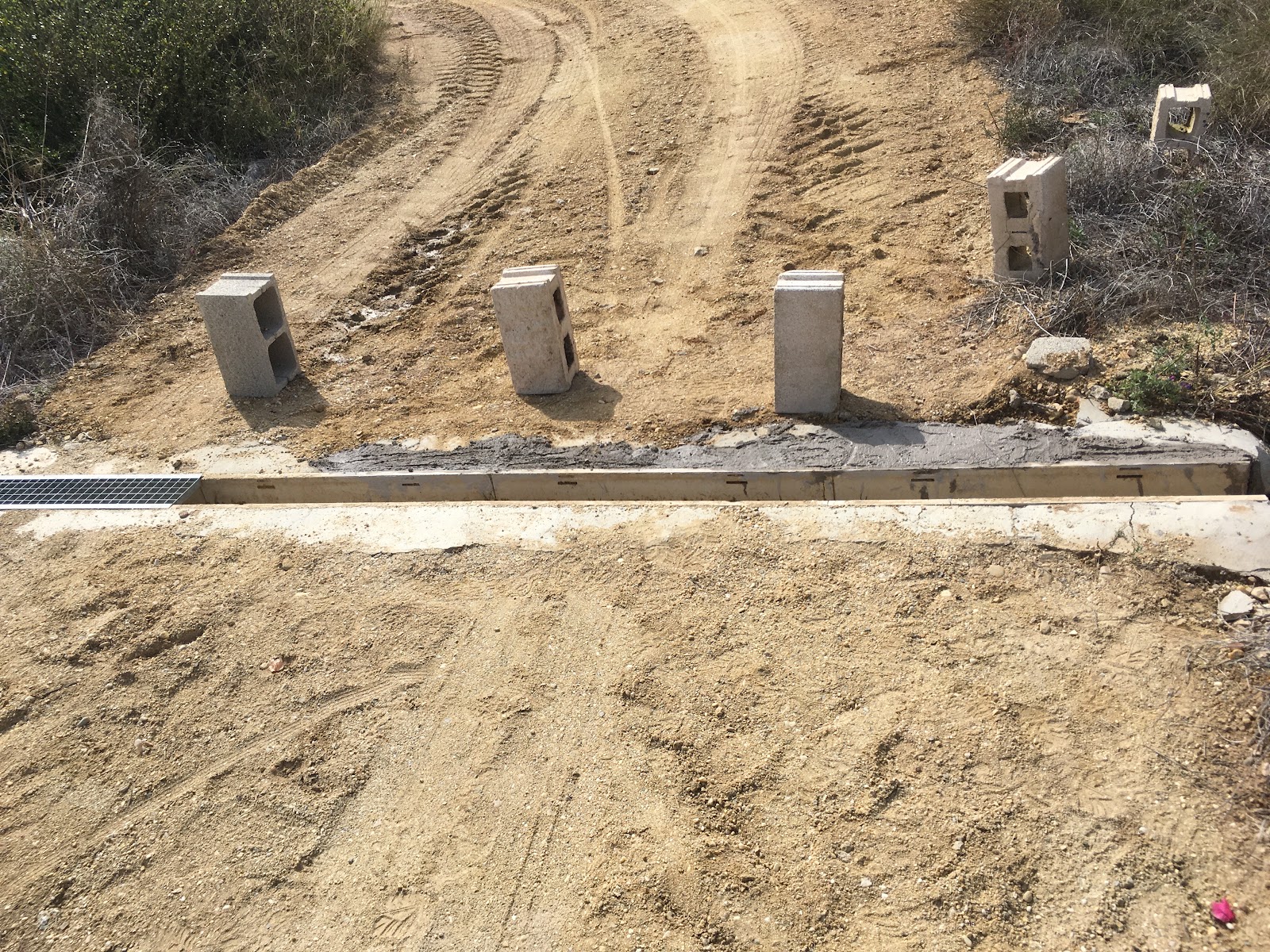
The big flow of water stems from the field behind us, right behind that white electricity pylon. It then flows onto our road, filling up the canal you can see below. After that the water simply flows over, damaging the road, again. The solution will be to block that flow of water. There already is a canal dug there, by us, but the water flows too quickly to be contained. It needs a row of those concrete blocks to contain it. We will order a pallet of those and lay them in a row, right next to our road.

So, here we go again: repairs. 

Luckily our neighbour makes roads, he made this one, and he came with a machine the afternoon of the day after. No need to add extra sand or gravel, there still was enough material. That machine is great! They use it in one direction to collect material, then reverse it to spread it. Clever.


The concrete of the canal was broken by the machine.  They said that is was because the machine is really heavy, but engineer Jansen thinks they simply hooked the concrete.  we re-inserted the bits, with some wire mesh in between, and a rather liquid mix of cement and sand to fill the gaps.

We put a reflector triangle at the entrance gate, to keep people out while the road was unusable. That did not stop the damn arrogant kutneighbours down the road. They arrived in their car, got out, put the triangle and block of stone to the side, went back in their car, continued, saw they could not continue, got out and walked. 

4. Water tunnel

Water in front of the garage, again. This time engineer Jansen noticed that there is a plastic tube in the wall that expels water from the tunnel. At midnight he thought of this, and got out of bed: the water is now caught in this contraption, the grey plastic pipes and white blocks, and directed to the irrigation channel, away from the garage:

This pipe in the wall was always there, but in the past expelled its water into the irrigation channel that we severed and redirected to build the ramp to access the garage.  Never noticed it before!

The ad hoc construction is now permanent:


The stones around the white plastic pipe were rather loose, took them out, re-inserted them with some sand:lime:cement:water 2:1:1:1 mixture. 

5. Septic overflow (no pictures)

Well, last time we had very substantial rain we noticed a slow rising of the water in the downstairs loo. We attributed that to the soil becoming saturated with water, and thus raising the water level in the main septic tank, resulting in that rising water level in the downstairs loo. 

But, engineer Jansen was never really satisfied with that reasoning, noticing that the water canal behind our house was full of water. The overflow of our septic system exits into that canal via a buried pipe. But, if the canal is full of water the situation might be reversed, and the overflow might become an inflow.

So, when we noticed the water level rising again, but now very quickly after the onset of the rain the theory of waterlogged soil was abandoned, and the overflow pipe became the suspect again. While rain was gushing we removed the septic's lid, and yes, there was the water flowing in.  Used a bit of sponge in a plastic bag to block it, as a temporary measure.

The previous time we prevented trouble using our Gardena pump to pump out water, and lower the water level. That did not work this time, as there was some dirt in the pump, and it refused to work. Used a siphon as an alternative. Still, a bit of smelly water ended up on our kitchen floor. The engineers had a busy evening. 

(In Waar is de kak? // Where is the poo? you can read more juicy story on the septic tank(s). ) 

6. Gravel

The gravel in the orchard was inundated too. We are extremely lucky and happy that the water flowing actually was clean, and left no muddy residue. So, no tiresome cleanup there! 


Saturday, February 18, 2023

Tejado 2

In Tejado Engineer Jansen described work on the roof, in September 2022. It is now February 2023, and no, he has not finished yet.  

The east part of the roof (pic below) has now been totally PUR-red and the ends are filled with lime mortar. What remains to be done to this roof half is put a bit of lime mortar on the cement arcs that were not replaced, for consistent color of the roof. Now there are dark patches where there is no new white blob of lime mortar. 

yes, the walls are still having the barra Sahara mud rain stains

Last thing is: paint the sides, on the seams, with LANKO, a flexible cement originally intended for water basins.

Now for the west side

Same procedure. Test every cement arc  at the end of the roof tiles if they are loose. If so: remove. See if there are remaining loose cement bits with a piece of iron wire bent into a small hook.

Then see if the tile itself is still firmly affixed. If not: remove, clean the sides with a copper brush. Clean the cement ridges where the tile was sitting, we want the tile to be exactly where it was, so no grit in between. Wet both tile and seat with a spray of water from the hose (spray gun), then apply PUR para Tejado to stick the tile in place. 

yes, that is a bird's feather and remains of nesting material

fill the grooves where the tile was sitting with PUR

stick the tile back in place, a thin layer of PUR glues it to the roof
the end opening also is filled WITH PUR, it will still get a blob of lime mortar

When the PUR has hardened remove sPURious (ha ha ha) PUR with palet knife, put blob of lime mortar in the end openings. As the top rows here, bottom rows still have unremoved old cement:


For the west end all tiles have now been PUR-red. 


Now the engineer is rather exhausted, his joints ache, his fingers are tired, and he's feeling old.  These last pictures are January 29th 2023. Awaiting better weather and restored health.

Next step is remove spurious PUR, apply lime mortar blobs, and paint sides with LANKO.

Estimated two more months of work, as you can only do this a few hours per day max.

Results

There are great results too.

The roof no longer leaks, even though the roof tile sides still need treatment with LANKO. 

Another great thing is that we no longer have grit in the house when it is windy. In the past we always had some grit along the central wall in the living room, and in the second bathroom. We even put up a row of IKEA cupboard to catch the grit in the living room. Not necessary any more. The canals under the roof tiles were all connected, and connected to the canal under the roof ridge. That is where the bat was, too. And because of missing cement arcs the canals were connected to the outside, too. So, wind blew the sand that is in those canals into the house. It was not that the gypsum layer was crumbling, that is fine.

It also explains why we always had wasps upstairs in the house in summer, despite all windows having mosquito screens. Where there were openings wasps got in, made little wasp nests under the roof tiles, and by mistake also came into the house. 

Sorry, wasps, bats, birds. 


Wednesday, September 21, 2022

Tejado

Tejado is the Spanish word for roof. We have a very old classic tejado. It is constructed by putting wooden beams on top of the walls, and perpendicular to that thick reeds. On top of the reeds they apply a layer of sort of mortar. That sort of mortar is a soft mixture of clay and gypsum. On top of that are placed the classic arabic tiles.  

This tejado probably is 100 years old, the beams have porcelain electric insulators in some places that were used up until 1925, nicely dating the roof before 1925. Basically the roof is fine, these tiles are very strong and thick terracotta. But, certainly the roof ridge needs maintenance. The rest of the roof has the tiles alternating up-down-up, and at an angle, so in principle that cannot leak. But the roof ridge is just horizontal tiles on top of some cement, with the end openings filled with mortar. And, most tiles there were loose, and/or with gaps, and many end bits missing or cracked. That should explain the leaks we have experienced last winter!

Our constructor has worked on the roof a few years ago, but did not have enough time for more work short term, and the rainy season is approaching.

Engineer Jansen does not really suffer from vertigo, but does not like the idea of moving around a tilted roof. Even if it is not a steep roof.  Yet he got over his fear, tied the ladder tightly to the chimney, hauled up 4 foam mattresses to be able to crawl over the roof on his knees, and inspected the roof. He did not like what he saw. 


And (sorry it's not sharp, the engineer was shaking):


There are 41 tiles in the roof ridge, about 35 were loose and could easily be removed, like this:


Note the marker lines that tell how they were positioned before removal. Also note that this bit is filled with some mortar, but the mortar did not touch the tile, so that was just held in place at the sides, and by sticking under the tile before, and overlapping the next tile.

Where the tiles overlap they should have some (lime) mortar, but they did not, any more.


In the picture above you can see that the ridge is filled. And the filling is.. dry soil and some stones.  Engineer Jansen removed all that dirt using the ash vacuum cleaner that we normally use to clean the pellet stove. 


About 40 liters of rubbish was removed:


As this was a job that could not be done in one day the tiles were put back, fixed with bags of gravel.


To fill the roof ridge Engineer Jansen went back to a classic building material: lime mortar.  Why? Because lime mortar is soft and flexible, and old tiles need that. If you use a modern cement the joint will be very hard and inflexible. What happens when the construction ages and the mortar is at end of life (50 years) a modern cement cracks and breaks the brick or tile that it is fixed to. When a lime mortar joint breaks the lime mortar breaks, but leaves the tile or brick undamaged.  Old bricks and tiles are not as hard as modern ones, though these roof tiles are STRONG!

Various restorations explained in youtube videos made use of a 3 : 1 : ca. 0.8 sand : lime : water (by volume) mix.

Lime is available here: Gecol Cal de Construccion


There are more lime mortar products, Gecol advised Gecol Sec cal-H, but not readily available.

The difference is that Cal de Construccion is just 95% lime, and you have to add aggregates like sand and bits of stone to make a mortar. The other products are readily mixed. If you are interested (yes you are) see Gecol Lime Mortars.

(I went to the local building materials supplier, to ask for an advice. The expert was called, who told me Gecol Cal was mainly portland cement. It isn't, it's 95% pure lime. So much for the experts. They don;'t know anything about lime mortars.)

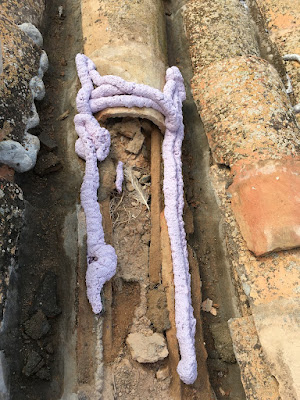
Anyway. Besides lime mortar the engineer did use a modern product:  PUR foam for tejas. Recognize the tiles on the label?

This is a different PUR than regular yellow PUR: it does not expand much, and is more a glueing foam than a filler. The color is purple initially, but changes color to sort of grey-green when it hardens. 

Planned to use just a blob at the ends of the tiles, but decided to use more, as it turned out to be very difficult to actually stick the tiles in place with just lime mortar. The how-to videos showed that they use a blob of lime mortar to fill, and on top of that a line of pur to glue the tile. 

The pur also peeped through the joints at the side, which is not bad actually. When hard the surplus is easily removed.

To fill the joints, with the PUR scratched out, another product: Lanko 227 Imper Megaflex, a cement-ish product that contains fibers. It's usually used for repairs and to fill cracks. It adheres well to both cement and ceramics. So. 

It's expensive too, a 15 kg bag is €75.  For the roof ridge I have used 2 kg, but the rest of the roof will need more. You need to use an exact amount of water, and mix it with an electric drill mix thing to sort of a toothpaste consistency. Then you can fill your cracks, using a spatula or a brush. I used a paint brush mostly. One layer already looks fine, but the instructions tell you to apply two coats.  Engineer Jansen obediently did so.


Well. We will see if this improves the roof. That really is necessary, last winter was cold and wet, and the roof was also cold and wet, and leaked. Not really a lot, but a drop of water every few minutes is quite irritating. 

Secondly, the gypsum layer under the roof tiles gets damp, which makes it lose any insulating properties it might have had.  And heat that touches a wet roof vanishes. 

Thirdly, after filling the gaps we had a bat in the living room.  In total silence it swooped around the room. Poor thing, it probably lived in the roof ridge, slipping in and out through the gaps, that are now filled, so the only exit was to the inside of the house. (Removed the mosquito screens to let it out.) As the bat could slip into the living room from the roof ridge, probably warm air could slip out, too.  

We can properly heat the ground floor with the pellet stove, but could not maintain a comfortable temperature upstairs for longer periods.  Which makes sense now, I think. We'll see how it is this winter!

(This was a whole week working HARD, up and down the ladder, about 100 kg mortar was processed, the engineer is not that young any more, obviously.)


Thursday, January 23, 2020

Roofy leaks..

Rain, wind, hail. And not the welcome hail. Not a great day.

And yes, still leaks in the roof. Not much, but enough not to want that on your face at night.


Tuesday, April 2, 2019

Techo reparado

Techo reparado - Roof repaired. With heavy rain we still had some leaks. They cleaned the canals between te rows of tiles, and applied a nice flexible waterproof cement layer. Now the water should run off the roof quickly, and not cause leaks any more.

Monday, March 12, 2018

The starling, the roof tile and the bottle

Today engineer Jansen risked his life (again) on a wobbly ladder. There is a roof tile that missed the blob of cement on the outside, and a smart starling noticed that, and thinks: nice habitat! It is right, but it's already mince. And I don't want any vandal starlings with a nesting urge. That only gives us grit in the house. These roofs are not more than a layer of gypsum/clay on reeds under roof tiles. At the arrow an old 2-liter cola bottle was inserted up it's front door. Soon the roof will be maintained a bit, and the opening closed with cement again.


Thursday, January 19, 2017

No snow

Also www.windytv.com/ thought 35 cm of snow a bit too much, and therefore changed their website layout. The snow has gone, and only some rain is left, but a lot less than predicted. Which is good, because today the roofer was dropping by to repair the fissures in the roof causing leaks. And, as it happens with contractors: something else had come up, and he would get to us on Saturday. After the floods.


Sent a help-us mail, that this was quite a nuisance, as a lot of rain and snow were predicted. He dropped by the same afternoon after all, with a tub of cement, which was nice. And good, see the pictures. In days-long heavy rain that gave us some leaks.